Gas Line Services in Chase and the Shuswap
Gas line services cover everything from a short run out to a barbecue to a full appliance install, a line extension for a garage heater, or tracking down why a system will not hold pressure. Jeff holds a licensed B gas fitter ticket alongside a Red Seal in plumbing, so the gas work, the appliance connection and the permit all come from the same person. We work with natural gas and propane across Chase, Kamloops, Salmon Arm and the Shuswap.
What We Run Gas For
The common ones are ranges and cooktops, dryers, barbecue and fire table connections on a deck or patio, garage and shop heaters, gas fireplaces, pool and hot tub heaters, and standby generators. Alongside those we do line extensions when an appliance moves during a renovation, re-sizing when an addition puts more load on a system that was never designed for it, conversions between natural gas and propane, and shutoff or capping when an appliance is being removed.
The part that is less visible but matters more is sizing. A gas line is not simply a pipe that fits the fitting. It has to deliver the required volume at the required pressure to every appliance running at once, over the actual length and through the actual number of elbows in the run. Adding a second appliance to a line that was correct for one is one of the most common faults we find, and the symptom is not a dramatic failure. It is a fireplace that will not stay lit when the range is going, or a furnace that under-fires and nobody understands why.
Permits Are Not Optional, and They Are Ours to Pull
In British Columbia a new gas installation or an alteration to an existing one requires a permit from Technical Safety BC. When you hire a licensed gas contractor, obtaining that permit before the work starts is the contractor's responsibility, not yours. We handle it.
There is a homeowner permit, and it is worth understanding how narrow it is, because it gets misread constantly. It applies to a fully detached dwelling that you own and live in as your permanent residence. It does not cover rental properties, duplexes, townhouses or strata units. And nobody may be paid to do the work or to assist with it, which means you cannot pull a homeowner permit and then have a tradesperson help you under it. For most people, on most jobs, hiring a licensed contractor who pulls the permit is the only route that is actually available.
It is worth caring about this beyond compliance. Unpermitted gas work is the sort of thing that surfaces at the worst moment: during a home inspection when a sale is in progress, or in a conversation with an insurer after something has gone wrong. Work that was permitted and tested has a record behind it.
Gas and Pipework
If You Smell Gas
Do not look for the leak yourself and do not operate anything electrical, including light switches and garage door openers. Leave the building, and from outside call your gas utility's emergency line or 911. Once the immediate situation is made safe, we can find the fault, repair it, pressure test the system and get the appliances back in service properly.
Smaller symptoms are worth acting on before they become that. A faint smell near an appliance that comes and goes, a pilot that keeps dropping out, soot around a burner, or a persistently high gas bill with no change in use are all worth a look. Most of what we find is a fitting, a regulator or a control at the end of its life rather than anything dramatic.
Where We Work
Chase
Fuel in and around the village is genuinely mixed. Some properties are on natural gas, plenty of the rural ones are on propane, and a good number are electric with a single gas appliance added at some point along the way. That last group is where we do the most work, because a line run years ago for one appliance is often now feeding two or three. Confirming what the property actually has, and what the existing line can actually carry, is the first thing we do rather than something we assume from the street.
Kamloops
Kamloops is well served with natural gas through FortisBC, so the work here skews toward extensions and additions to established systems: an outdoor kitchen, a shop heater on a detached garage, a generator. The recurring question is whether the existing service and the existing branch sizing can carry the new load with everything running at once, which is a calculation rather than an opinion.
Salmon Arm
Also on the FortisBC natural gas system across much of the city. A lot of what we do here is renovation-driven, where a kitchen moves and the range with it, or a fireplace goes in during a remodel. Gas that has to be relocated inside a live renovation needs to be sequenced with the framing and the drywall rather than fitted in afterwards, and that is worth planning before the walls close.
The Shuswap
Propane dominates outside the serviced areas, and propane brings its own considerations: tank siting and clearances, regulator staging, buried line from tank to building, and the fact that propane is heavier than air and will collect in a low space rather than dissipate upward. On seasonal properties there is also the annual reality of a system being shut down and brought back into service, which is the right moment for a leak test rather than the wrong moment to discover you needed one.
What Moves the Price
The length and route of the run, and how much of it is accessible. Whether it goes through finished space, underground, or across a crawlspace. Pipe material and size, which comes out of the load calculation rather than preference. The number of appliances and whether the existing system has to be re-sized to take them. And the permit and the pressure test, which are part of every job we do rather than a line you can decline.
Common Questions
Do I need a permit to install a gas line in BC?
Yes. New gas installations and alterations require a permit from Technical Safety BC. When you hire a licensed gas contractor, the contractor pulls the permit before work begins. We take care of it as part of the job.
Can I install my own gas line?
Only in a narrow set of circumstances. A homeowner permit applies to a fully detached dwelling you own and live in as your permanent residence, and nobody may be paid to do or assist with the work. Rentals, duplexes, townhouses and strata units are excluded. For most properties and most people, a licensed gas contractor is the only available route.
How much gas line can I add to my existing system?
It depends on the size of the incoming service, the size and length of the existing pipe, and the total demand of every appliance running at once. It is a calculation, not a rule of thumb. Adding an appliance to a line that was sized for one is a common cause of appliances that under-fire or will not stay lit.
Can you run a gas line for a barbecue or fire table?
Yes, and it is one of the most common requests we get. The line is sized for the appliance, terminated with a proper quick-connect where you want it, pressure tested and permitted like any other gas work.
What should I do if I smell gas?
Leave the building without operating any electrical switches, and call your gas utility's emergency line or 911 from outside. Once it is safe, we can locate the fault, repair it and pressure test the system.
Do you work with propane as well as natural gas?
Yes. Much of the Shuswap outside the serviced areas runs on propane, and we work with both. Appliances are not interchangeable between the two without the correct orifices and manifold pressure, which we set and verify.
Can you convert an appliance from natural gas to propane?
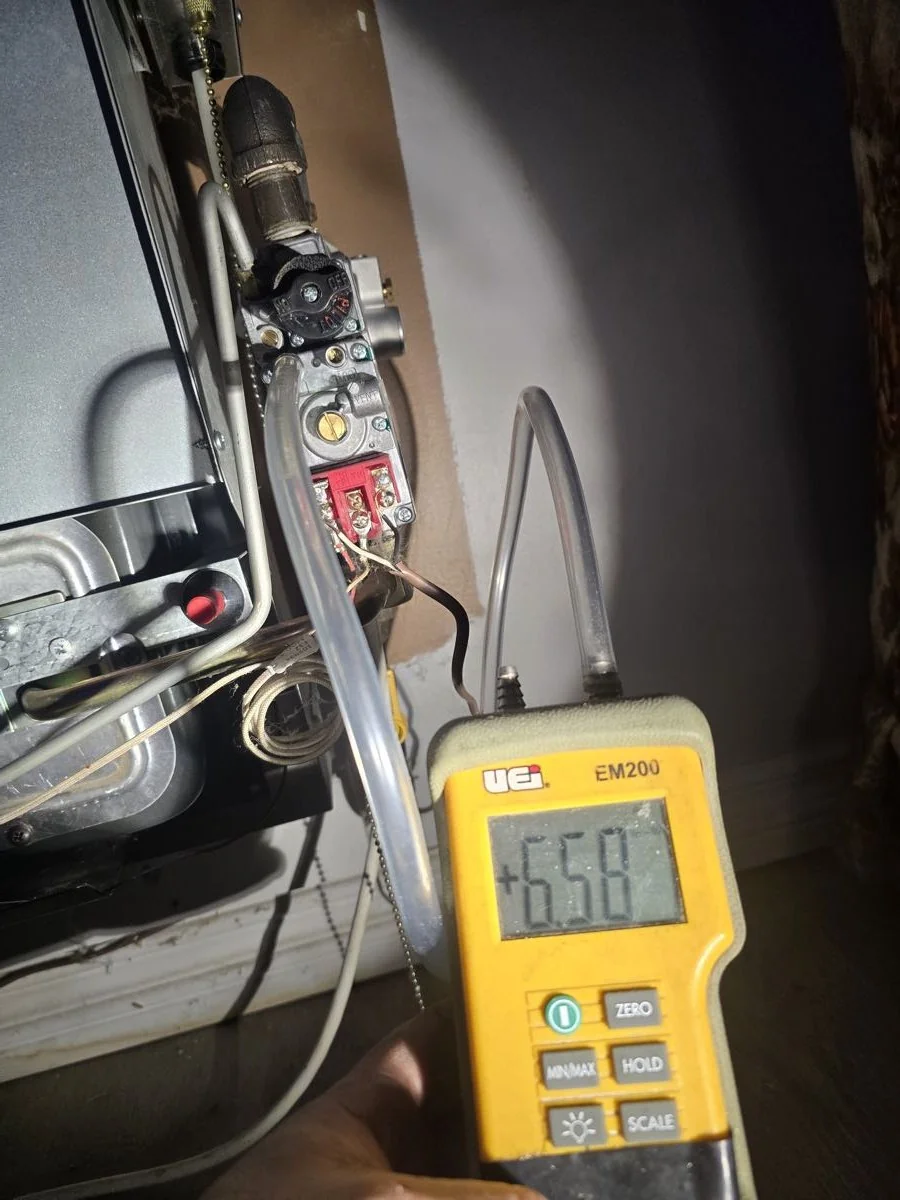
In most cases, where the manufacturer supplies a conversion kit for that model. It requires the correct orifices and a manifold pressure adjustment verified with a manometer. It is not a matter of simply connecting a different fuel.
Will unpermitted gas work cause a problem when I sell?
It can. Gas work is commonly flagged during a home inspection, and an installation with no permit record behind it is the kind of finding that stalls a sale or becomes a negotiating point. It can also matter to an insurer after a loss.
Need a Gas Line Run?
Call Jeff directly. Licensed B gas fitter and Red Seal plumber, answering 24/7 across Chase, Kamloops, Salmon Arm and the Shuswap.
Call (604) 375-2289