HVAC Services in Chase and the Shuswap
HVAC services covers heating, cooling and the air moving between them, and the reason to treat it as one thing is that the faults rarely respect the boundaries. A house that will not cool in July and has cold rooms in January usually does not have two problems. It has one duct system that cannot move enough air, showing up twice a year in different clothes. We work on the whole system across Chase, Kamloops, Salmon Arm and the Shuswap, and the phone is answered at any hour.
What This Page Covers, and Where to Go Instead
If you already know what you need, go straight there. We have detail pages on heating repair, furnace installation, AC repair, water heater repair, hot water tank installation and gas line services. What follows is the whole-system work that does not belong on any single one of those: maintenance, diagnosis when it is not obvious which component is at fault, ductwork and airflow, ventilation and air quality, and planning a replacement before the current system decides the timing for you.
Maintenance, and Why It Is Not a Sales Line
Most of the emergency calls we take were preventable, and the pattern is consistent enough to be boring. A capacitor that was reading low in spring fails in the first heat wave. A flame sensor that needed cleaning drops the furnace out on the first cold night. A condensate line that was starting to block overflows and trips a safety. None of these are dramatic failures. They are maintenance items that were not looked at.
An annual pass on the heating side before the season starts, and on the cooling side in spring, catches the large majority of it. For a rental or a property you are not living in full time, that is the difference between a scheduled visit and a phone call from a tenant or a guest at eleven at night.
Airflow Is the Problem More Often Than the Equipment
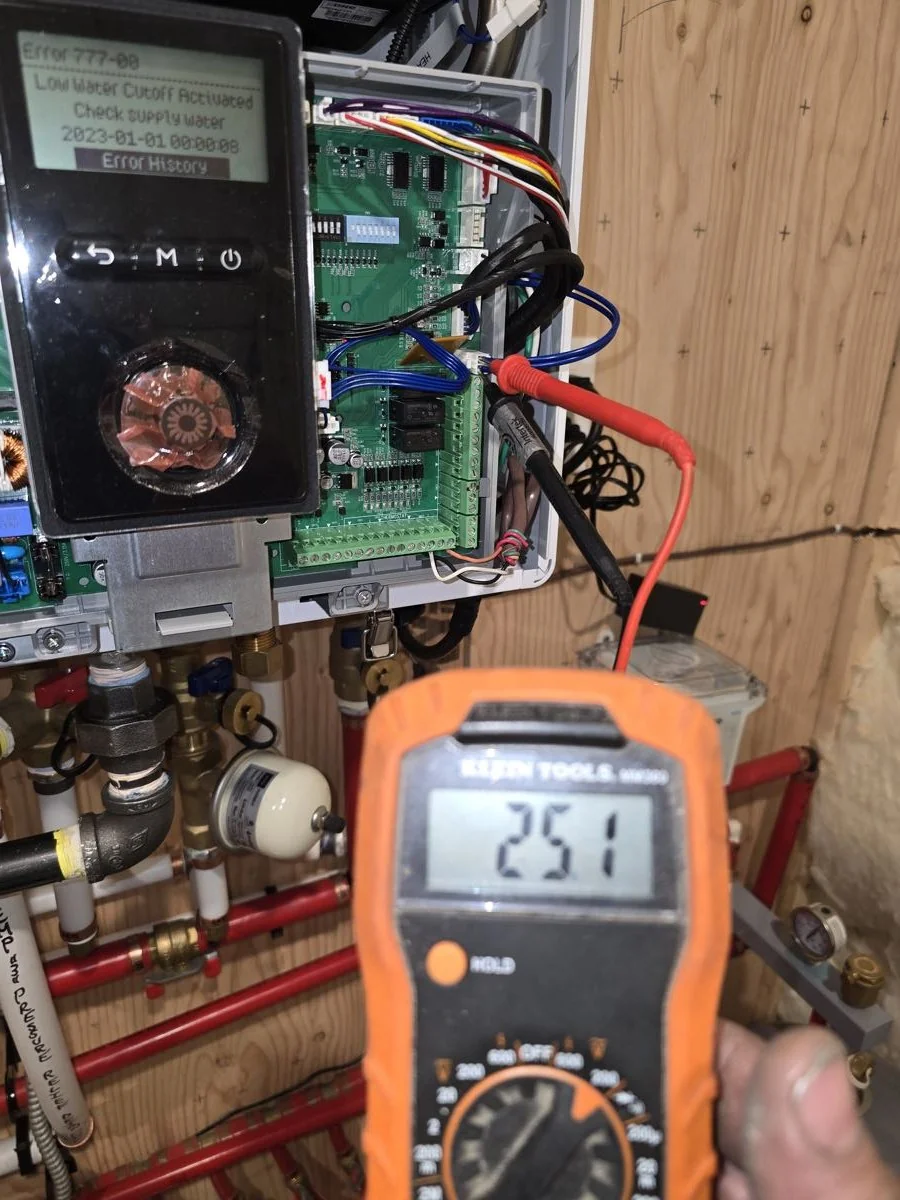
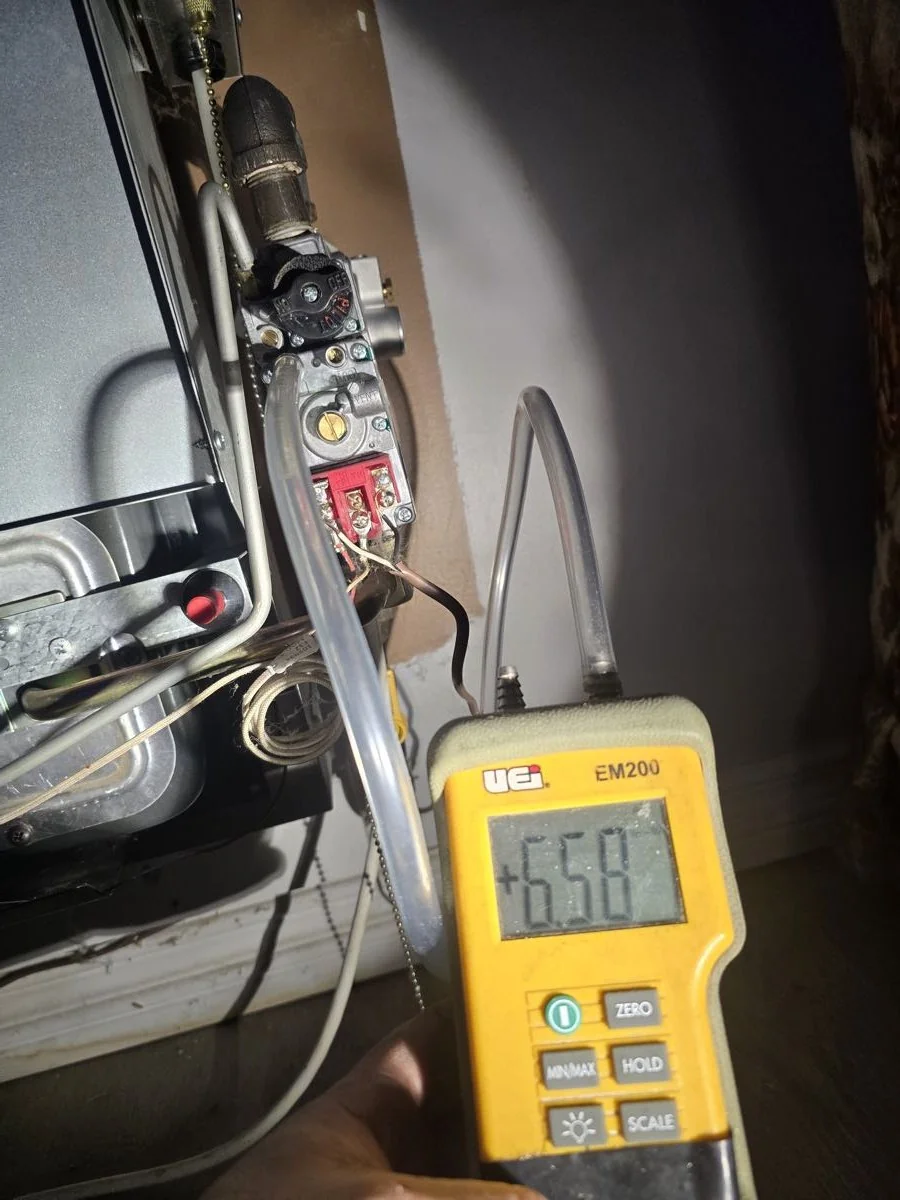
This is the part most often skipped. A furnace and a coil are sized for a certain airflow, and the duct system either delivers it or it does not. When it does not, the equipment cannot perform to its rating no matter how new it is. The symptoms get blamed on the furnace: rooms at the end of the run that never warm up, a system that short cycles, a coil that freezes in summer, or a brand new high efficiency unit that somehow feels worse than the old one it replaced.
The usual causes are an undersized return, which is very common in older houses that were built with one central return and later had rooms added, ducts crushed or disconnected in a crawlspace, flexible duct kinked around a corner, or a filter upgraded to a high-MERV cartridge in a system with nowhere near enough return area to pull through it. Measuring static pressure across the system takes minutes and settles the question. It is worth doing before anybody spends money on equipment.
System Work
Ventilation and Air Quality
Two local realities make this less abstract than it sounds. Wildfire smoke is now a normal part of an Interior summer, and the houses that cope best are the ones that can be closed up and still ventilated in a controlled way, with filtration the system can actually pull through. And newer, tighter construction does not exchange air on its own the way older leaky houses did, which is good for heating bills and bad for humidity and stale air unless something is doing the ventilating deliberately.
The practical work here is bathroom and range exhaust that actually vents outside rather than into an attic, heat recovery ventilation where the house is tight enough to need it, and filtration matched to the airflow the system has rather than the highest number on the shelf.
Where We Work
Chase
Chase is home and it is where we know the housing stock best. A village of around 2,400 people with roughly 1,250 dwellings, much of it built in the decades after incorporation in 1969. Systems here have usually been added to rather than designed: a furnace replaced once or twice, cooling added later, a wood stove still in the corner doing real work, and a duct system that has not been reconsidered since it went in. Whole-system diagnosis pays for itself in these houses, because the answer is frequently not the component that was blamed. Being based in the village also means we are minutes away rather than an hour, which matters when there is no heat in February.
Kamloops
About forty minutes west. Kamloops is the part of our area with the heaviest demand on both sides of the system: cold enough winters to need real heating capacity and summers that regularly sit between 35 and 40. That combination is where whole-system thinking matters most, because a furnace chosen without regard to the cooling coil, or a coil dropped onto a blower that cannot carry it, produces a system that disappoints in both seasons. When we are asked to look at a Kamloops system we look at both loads even if only one of them is currently complaining.
Salmon Arm
Around thirty-five minutes east, on the FortisBC natural gas system across much of the city. There is a wider spread of building age here than anywhere else we work, from older lakeside stock to recent construction on the hill, and the two need genuinely different approaches. Newer homes are tight enough that ventilation and humidity are live questions rather than theoretical ones. Older ones are usually about airflow and a heating system that has been extended past what it was drawn for.
The Shuswap
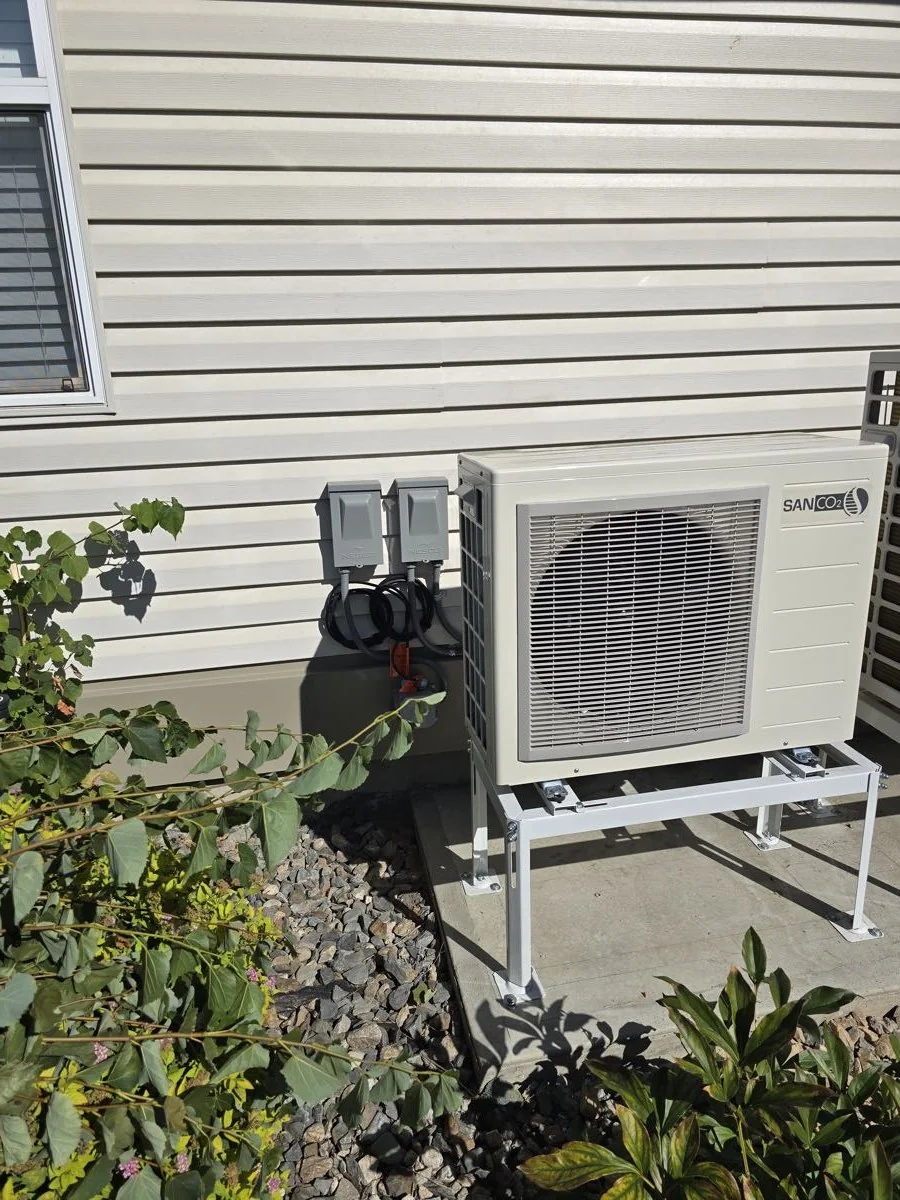
Sorrento, Blind Bay, Scotch Creek, Sicamous and the lake communities. The defining feature is intermittent occupancy. A large share of these buildings are seasonal or used at weekends, which changes what a sensible system looks like: ductless heat pumps that can hold a low temperature cheaply through an empty winter, controls that can be checked remotely, freeze protection on anything wet, and a startup check in spring rather than a discovery in July. Propane is common where natural gas does not reach, and it needs the correct setup rather than an assumption.
When to Plan a Replacement Rather Than Wait
Equipment tends to fail at the worst moment because the worst moment is when it is working hardest. A furnace fails in a cold snap and an air conditioner fails in a heat wave, and both are the weeks when everybody else is calling too. If your furnace is past fifteen years, your air conditioner past twelve, or you have already had two significant repairs in two seasons, you are on borrowed time and you have a choice about when to spend the money. Planning it in a shoulder season means a considered decision about sizing, fuel and whether a heat pump makes sense for the property, instead of taking whatever can be fitted tomorrow.
Common Questions
What does HVAC actually include?
Heating, ventilation and air conditioning: the furnace or heat pump, the cooling equipment, the ductwork and air handling, the controls, and the ventilation and filtration. We work on all of it, along with the plumbing and gas side, which is not always the case with an HVAC-only contractor.
How often should HVAC be serviced?
Once a year per side. Heating before the cold weather, cooling in spring. Most of the emergency calls we take are maintenance items that were not caught, so an annual pass is genuinely worth doing rather than an upsell.
Why are some rooms hot or cold no matter what I do?
Almost always airflow rather than the equipment. An undersized return, a crushed or disconnected duct in a crawlspace, a kinked flexible run, or a filter too restrictive for the system. Measuring static pressure across the system usually finds it quickly.
Is a heat pump a good idea in this climate?
In a lot of cases here, yes, particularly for a property with no ductwork or one that sits empty for stretches. Modern cold climate units work well down to low temperatures, and a heat pump covers cooling in the same equipment. Whether it suits your property depends on the building, the existing system and the fuel you have, and we will give you a straight answer rather than a default one.
Do you do both the heating and the plumbing?
Yes. Jeff holds a Red Seal in plumbing and a licensed B gas fitter ticket, so heating, gas and plumbing come from one contractor. On jobs where those overlap, such as a furnace and water heater sharing a chimney, that avoids the gap where each trade assumes the other dealt with it.
Can you service a system you did not install?
Yes, and most of what we service we did not install.
Do you handle wildfire smoke filtration?
We can improve it, within what your system can physically pull through. The important part is matching the filter to the available return air, because fitting a very restrictive filter to a system with an undersized return makes the airflow problem worse rather than the air better.
Do you work outside Chase?
Yes. Kamloops, Salmon Arm, Sorrento, Blind Bay, Scotch Creek, Sicamous, Pritchard and the wider Shuswap, alongside Chase itself.
Need Your Whole System Looked At?
Call Jeff directly. Red Seal plumber, licensed B gas fitter, answering 24/7 across Chase, Kamloops, Salmon Arm and the Shuswap.
Call (604) 375-2289