Hot Water Tank Installation in Chase and the Shuswap
Hot water tank installation is straightforward work done badly often enough that it is worth being particular about. We supply and install gas, electric and tankless units across Chase, Kamloops, Salmon Arm and the Shuswap, haul the old tank away, and leave the installation in a state that will pass an inspection rather than merely survive one. Jeff is a Red Seal plumber and a licensed B gas fitter, so the gas connection, the venting and the permit are part of the same job instead of a subtrade you have to chase.
Sizing It for the House, Not for the Old Tank
The default in this trade is to put back exactly what came out, and that is only right about half the time. A forty gallon tank that was correct for a couple in 1998 is not correct for the family with three teenagers living there now, and a sixty gallon tank left over from a full house is expensive to keep hot for two people. What matters is first-hour rating rather than raw capacity, because a gas tank with a strong burner delivers far more hot water in the first hour than its size suggests, and an electric tank of the same volume delivers considerably less.
We look at how many bathrooms get used at once, whether there is a soaker tub that has to fill in one go, whether laundry and showers overlap in the morning, and what fuel is already on the property. Then we size to that. It is a ten minute conversation that decides whether you run out of hot water for the next decade.
Gas, Electric or Tankless
Gas recovers fastest and is usually the cheapest to run where natural gas is available, at the cost of a vent, a permit and a gas connection done properly. Electric is simpler, has no combustion or venting to go wrong, and suits properties with no gas service, though recovery is slower and running cost depends on what the panel and the rate look like. Tankless heats on demand with no stored volume at all, which makes it genuinely well suited to a seasonal property that sits empty for months, and it needs a gas supply sized for its peak draw, which is often larger than the existing line.
Heat pump water heaters are the newer option and they are efficient, but they are a real appliance with real requirements: they need air volume around them, they produce cool air and condensate, and they suit a basement or a garage far better than a sealed closet. We have installed them and will tell you honestly whether the space you have is a good fit.
Installations We Have Done
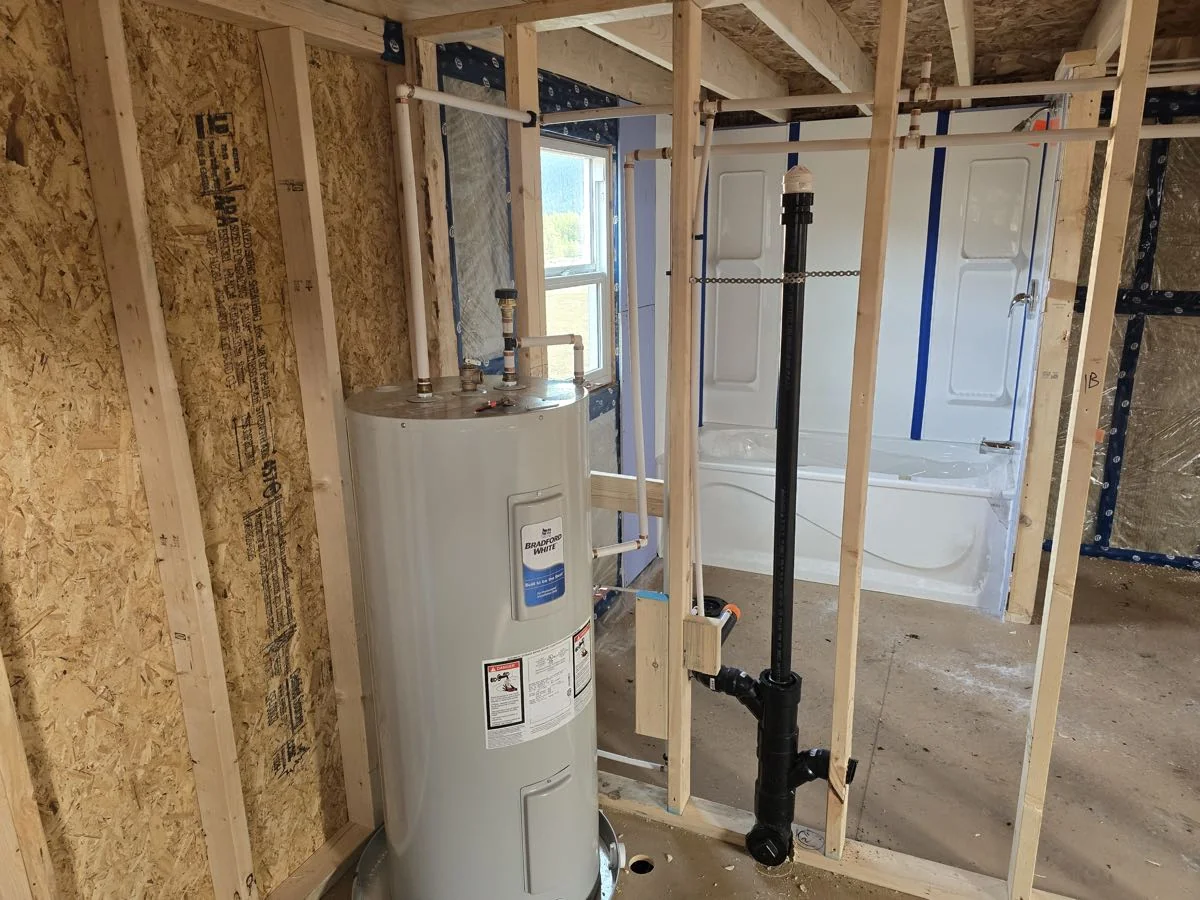
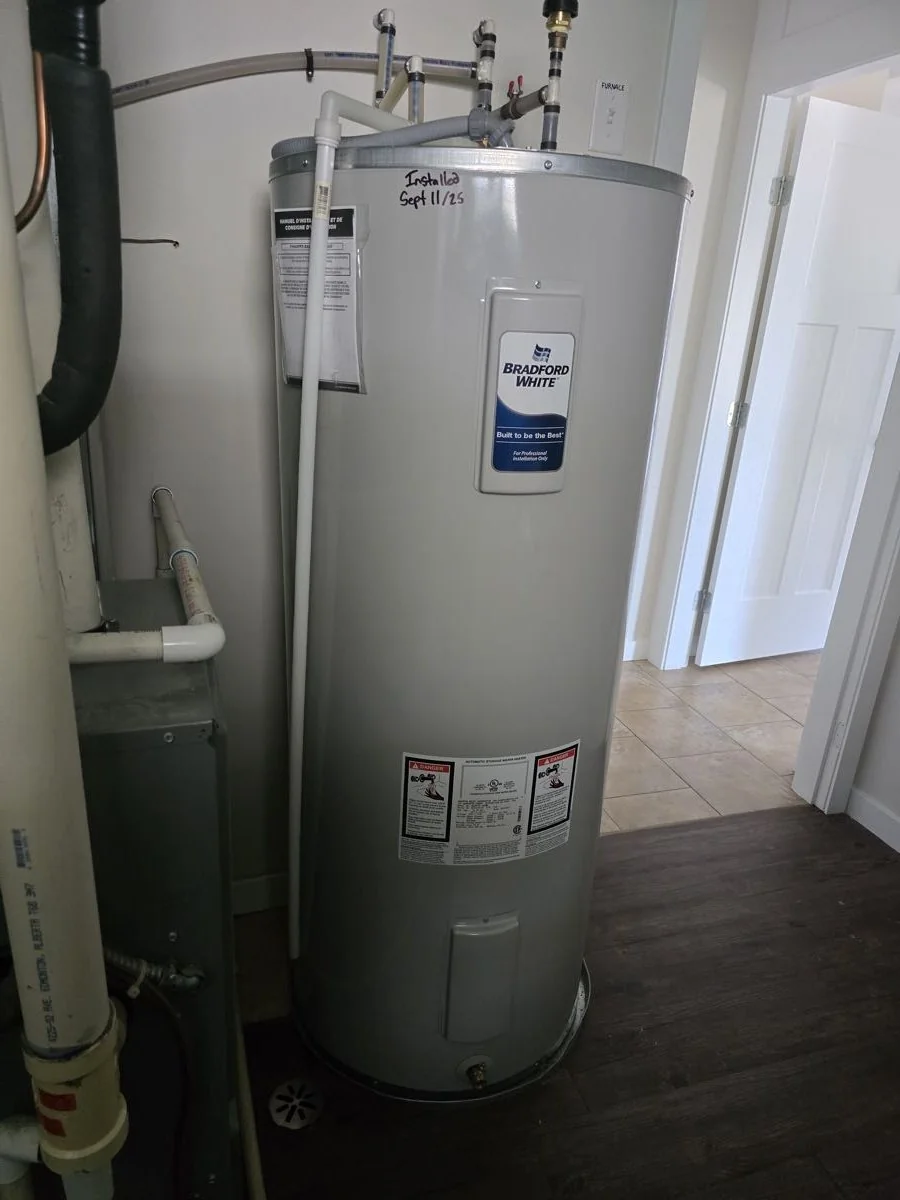
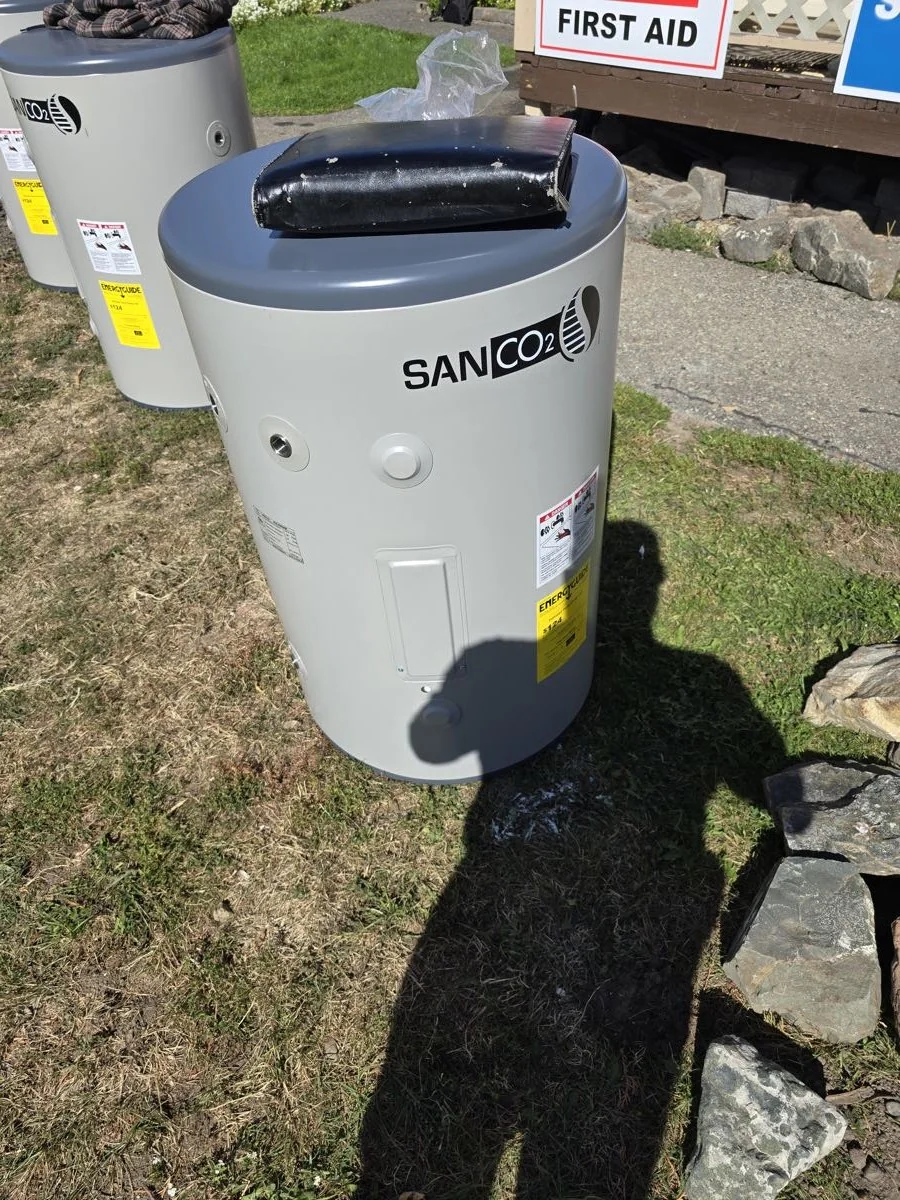
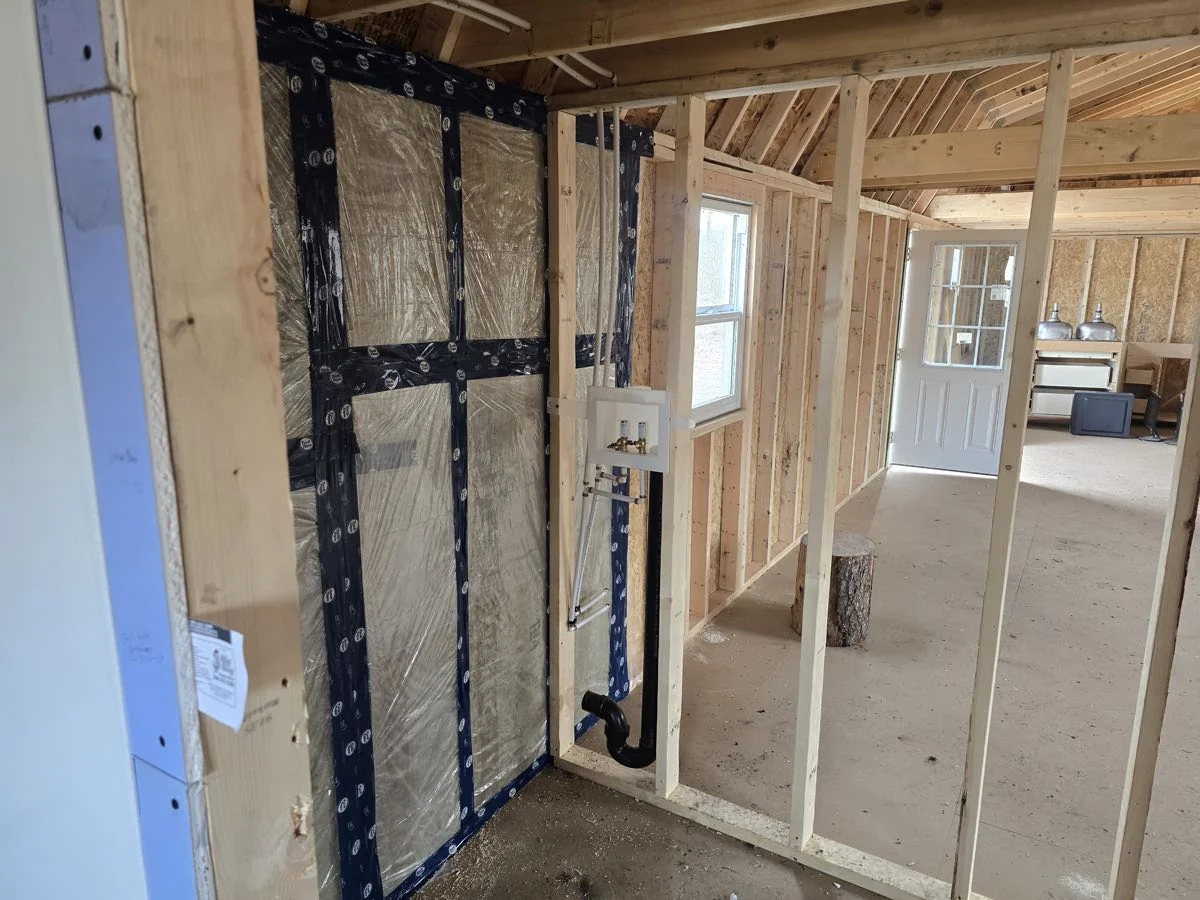
What a Proper Installation Includes
A new tank is not just a new tank. On a closed system, which is most properties with a backflow preventer or a pressure reducing valve on the incoming service, thermal expansion has nowhere to go and needs an expansion tank, or the relief valve will weep and eventually fail. The temperature and pressure relief line has to be run full size and terminated where a discharge will not scald somebody. Seismic strapping goes on. Dielectric unions or the right connectors go between dissimilar metals, because copper straight onto a steel nipple is a corrosion cell you have deliberately built. A drain pan and a drain go in wherever a leak would land on finished space.
On gas, the vent gets sized and pitched correctly, combustion air is confirmed rather than assumed, and the appliance is tested under load before we leave. None of this is exotic. It is the difference between an installation that lasts and one that produces a call in eighteen months.
Where We Work
Chase
Roughly 1,250 dwellings in the village, a good share of them built in the two decades after Chase was incorporated in 1969. That era of construction tends to put the tank in a purpose-built closet off the hallway or down in a crawlspace, and in plenty of cases the finished wall went up after the tank went in. When we quote a Chase replacement we want to see the space, because the removal path decides the job more than the tank does. Fuel is mixed here between natural gas, propane and electric depending on the street and the vintage, and that is the first thing we confirm.
Kamloops
The city's water hardness is the single biggest factor in how long a new tank will last, which makes this the place where the conversation about treatment is worth having at the same time as the install rather than five years later. If a softener or a scale inhibitor is ever going to go in, doing it alongside a new tank protects the new tank from day one instead of from the point somebody finally gets around to it.
Salmon Arm
Natural gas is available through FortisBC across much of Salmon Arm, so gas tanks and tankless units are both realistic here. On tankless in particular the deciding question is whether the existing gas line can carry the peak load, since a tankless unit can draw several times what a storage tank does while it is firing. That is a measurement, not a guess, and it is worth doing before anything is ordered.
The Shuswap
Sorrento, Blind Bay, Scotch Creek, Sicamous and the lake properties around them. This is where tankless earns its keep, because a cabin that is empty from October to May spends the whole winter with a storage tank either kept hot for nobody or drained down and refilled. Where a storage tank is the right answer anyway, we set it up so it can actually be drained without a fight: an accessible drain valve, a shutoff you can reach, and a clear way to bleed air on the refill so the first person back in spring does not burn out an element.
What Moves the Price
Tank type and capacity, first. Then fuel, because gas brings a permit, a vent and a gas connection. Then access, which is the wildcard in the older Chase and Shuswap installs where the tank has to come out through a space that was built around it. Then whatever the current installation is missing that code now requires, most commonly an expansion tank, a proper relief discharge line or a vent that was never correct. We would rather find those on the quote than on the invoice, so we look before we price.
Common Questions
What size hot water tank do I need?
Judge it on first-hour rating rather than gallons. A rough guide is forty gallons for one or two people, fifty to sixty for a family of three or four, and more where bathrooms get used at the same time or a large tub has to fill in one go. Gas tanks deliver more in the first hour than electric tanks of the same size.
How long does a hot water tank installation take?
A straight like-for-like swap is normally a few hours. Changing fuel type, changing size, adding an expansion tank or correcting a vent adds to it. Access is the thing most likely to turn a short job into a long one, which is why we want to see the space first.
Do I need a permit to install a hot water tank in BC?
Gas installations and alterations require a permit from Technical Safety BC, and it is the licensed gas contractor's job to pull it before work begins. Jeff holds a B gas fitter licence, so that is handled as part of the job rather than left to you.
Is tankless worth it?
In a seasonal or intermittently used property, often yes, because nothing is being kept hot while the place sits empty. In a full-time home with steady demand the case is less clear-cut and depends on the gas supply, the venting and what you are replacing. We will tell you when it does not make sense.
Can you install a heat pump water heater?
Yes. They need air volume around them, somewhere for condensate to drain, and they give off cool air, so a basement or garage works and a sealed hallway closet generally does not. We will look at the space before recommending one.
Do you take the old tank away?
Yes, removal and disposal of the old unit is part of the job.
What is an expansion tank and do I need one?
On a closed system, heated water expands with nowhere to go and the pressure rises until the relief valve lets go. An expansion tank absorbs that. If the property has a backflow preventer or a pressure reducing valve on the incoming water, you have a closed system and it needs one.
Replacing a Hot Water Tank?
Call Jeff directly. Red Seal plumber, licensed B gas fitter, answering 24/7 across Chase, Kamloops, Salmon Arm and the Shuswap.
Call (604) 375-2289